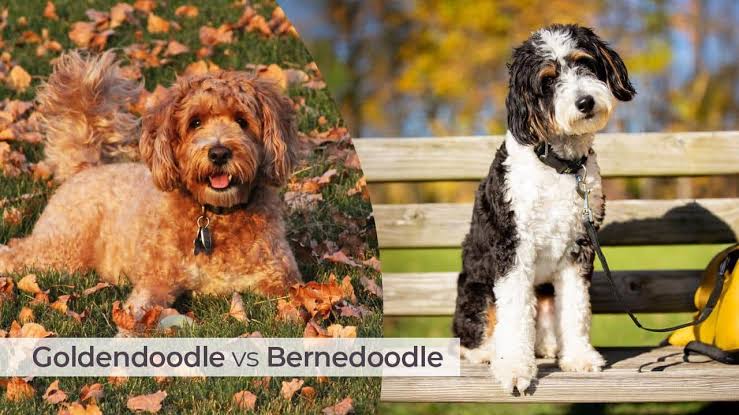
Comparing Goldendoodles and Bernedoodles? See real differences in size, energy levels, and grooming needs from an experienced Texas breeder, so you can pick the right fit for your family.
Goldendoodle vs Bernedoodle: Size, Energy, and Grooming Compared
Every week we get some version of the same question from families reaching out about our litters: "We love both, but which one actually fits our home better?" It's a fair question, and honestly one worth slowing down on, because Goldendoodles and Bernedoodles look similar in photos but live pretty differently day to day. We've raised both breeds long enough to see where they genuinely overlap and where they don't, so here's the honest breakdown, not the marketing version.
Where They Come From
A Goldendoodle is a cross between a Golden Retriever and a Poodle. A Bernedoodle crosses a Bernese Mountain Dog with a Poodle. That one difference in the non-Poodle parent explains almost everything else in this comparison, size, energy, coat, even how the two breeds tend to bond with a family. Golden Retrievers were bred as active hunting and retrieving companions. Bernese Mountain Dogs were bred as steady, sturdy farm dogs in the Swiss Alps, built for pulling carts and watching over livestock, not sprinting after a ball for an hour. Keep that history in mind as you read the rest of this, it explains a lot.
Size: How Big Do They Actually Get?
Both breeds come in a range of sizes depending on the generation and which size of Poodle was used in the cross (Standard, Miniature, or Toy). Here's roughly what to expect at full adult size:
| Size Category | Goldendoodle Weight | Bernedoodle Weight |
|---|---|---|
| Standard | 50–90 lbs | 70–90 lbs |
| Miniature | 15–35 lbs | 25–49 lbs |
| Tiny / Toy | Under 15 lbs | Under 24 lbs |
Worth noting: even within a single litter, puppies don't always land at the exact same adult weight, since coat and size traits are inherited from two different breeds and don't blend evenly. If we have a specific target size in mind, we're always happy to talk through the parents' actual weights with you before you reserve, since that tends to predict the outcome more reliably than the generic breed averages above.
Energy Level: The Difference That Actually Matters Most
This is where the two breeds genuinely diverge, and it's probably the single most important factor in choosing between them.
Goldendoodles tend to be higher energy, playful, and eager to please, traits pulled straight from the Golden Retriever side. Most adult Goldendoodles do best with 45 to 60 minutes of real exercise a day, not just a walk around the block. They love fetch, swimming, agility-style play, and generally want to be doing something with you. If you're an active household, someone who hikes, runs, or just wants a dog that's up for anything, this energy level is a huge plus. If your household is quieter, it can occasionally feel like a lot, especially in the first 18 months before they settle.
Bernedoodles are, generally speaking, calmer. Not lazy, they still enjoy a good walk and playtime, but the Bernese Mountain Dog side brings a steadier, more laid-back temperament. Many Bernedoodle owners tell us their dog is content with a solid 30 to 45 minute walk and then happy to lounge nearby for the rest of the day. They tend to be a little more independent too, less likely to be glued to your side every second, though they're still deeply affectionate and loyal.
Neither of these is "better," it genuinely comes down to your household's pace. We've placed high-energy Goldendoodles into quiet, calm homes before, and it can work, but it usually means more structured exercise and mental stimulation to keep the dog satisfied. Same goes in reverse, a Bernedoodle can absolutely keep up with an active family, they just won't demand it the way a Goldendoodle sometimes will.
Grooming: What You're Actually Signing Up For
Both breeds inherit a non-shedding or low-shedding coat from the Poodle side, which is a big part of why families choose them in the first place. But the day-to-day maintenance isn't identical.
Goldendoodle coats range from wavy to tightly curled depending on generation. First generation (F1) puppies often have looser, wavier coats and can shed slightly more than later generations. F1B and multigenerational Goldendoodles (bred back toward Poodle) tend to have curlier, denser coats that shed very little but mat more easily if not brushed regularly.
Bernedoodle coats follow a similar generational pattern, but the coat itself tends to be a bit thicker and denser overall, a nod to the Bernese Mountain Dog's double coat. This means Bernedoodles, especially F1 puppies, can shed a little more than people expect for a "doodle" breed, and the fluffier areas behind the ears, under the legs, and around the collar mat quickly if brushing is skipped for even a week.
For both breeds, here's the realistic grooming routine we recommend:
Brushing 3 to 4 times a week minimum, more during seasonal coat changes
A slicker brush and a metal comb to catch mats close to the skin, not just the surface
Professional grooming every 6 to 8 weeks for a trim, sanitary clean-up, and nail care
Extra attention around the ears, since both breeds' floppy ears trap moisture and need regular checks to avoid infections
If grooming upkeep is a dealbreaker for your schedule, neither breed is truly "low maintenance," but Goldendoodles in later generations (F1B or multigen) tend to be the slightly easier of the two to keep mat-free with consistent brushing.
Temperament With Families
Both breeds are, in our experience, excellent with kids and generally easygoing with other pets, but the flavor of that friendliness differs. Goldendoodles tend to be more overtly social, the dog that greets every visitor at the door and wants to be part of whatever's happening. Bernedoodles are affectionate too, but often in a quieter, more devoted way, they bond closely with their people and tend to be a little more reserved with strangers at first, warming up over time rather than instantly.
If you have very young children, both breeds are generally patient and gentle, though we always recommend supervised introductions regardless of breed, size, or reputation, since every individual puppy has its own personality that shapes over the first year.
So Which One Is Right For You?
If we had to boil it down:
Choose a Goldendoodle if you want an active, social, always-up-for-something companion and don't mind a bit more daily exercise commitment.
Choose a Bernedoodle if you want a steady, devoted companion with a calmer day-to-day pace, and you're prepared for slightly denser coat maintenance.
Honestly, either breed can thrive in almost any home with the right amount of exercise, structure, and grooming. The real deciding factor usually isn't the breed at all, it's being honest with yourself about your actual daily routine, not the routine you're hoping to have.
Frequently Asked Questions
Do Bernedoodles shed more than Goldendoodles?
Generally yes, especially in F1 generations. Later generations (F1B, multigen) shed less in both breeds, but Bernedoodles tend to carry a slightly thicker coat overall due to the Bernese Mountain Dog influence.
Which breed is better for a first-time dog owner?
Both are considered good choices for first-time owners thanks to their trainability and friendly nature. Bernedoodles' calmer energy can make the adjustment period a little easier for some new owners, while Goldendoodles reward consistent training with an especially eager, quick-to-learn attitude.
Are Bernedoodles or Goldendoodles better with other pets?
Both breeds typically do well with other dogs and cats when properly socialized early. Neither has a strong prey drive compared to some other breeds, though individual personality always plays a role.
Which breed is more hypoallergenic?
Both breeds can be a good fit for allergy-sensitive families, particularly in F1B and multigenerational litters where the Poodle coat traits are more dominant. No dog is 100% hypoallergenic, but shedding and dander tend to be lower in later-generation puppies of both breeds.
If you're still deciding, reach out to us directly, we're always happy to talk through the parents' actual temperaments and coat types for our current litters, since that tells you more than breed averages ever can. You're welcome to browse our <a href="/Home/Product">available puppiesor get in touch through our <a href="/Home/Contact">contact page</a> with any questions.